Light Control of Quantum Materials and Exploration of Next-Generation Applications
Practical applications of emergent states in quantum materials require both a systematic understanding of complex physical mechanisms and precise control over microscopic degrees of freedom. Ultrafast-laser-based control offers an innovative route to this challenge: by driving systems far from equilibrium, it can overcome the limits of conventional tuning methods and create quantum states that are difficult or impossible to realize under equilibrium conditions. For this reason, ultrafast optical control has become a central topic in modern condensed matter physics, and major ultrafast-science facilities are now being built worldwide to study photoinduced phenomena and ultrafast dynamics in solids.
As prototypical strongly correlated quantum systems, high-temperature superconductors remain one of the most challenging topics in condensed matter physics because of their complex electronic interactions and still-unresolved pairing mechanisms. Our group focuses on this fundamental problem by building self-developed time-resolved techniques—including TR-ARPES and time-resolved transport—and combining them with major facilities such as synchrotron radiation and free-electron lasers. We study photoenhanced superconductivity, transient ferroelectric control, and nonequilibrium phase-transition dynamics, with the goal of revealing the microscopic picture of high-temperature superconductivity through real-time tracking of ultrafast electronic-structure evolution.
From an application perspective, light–matter interaction already plays a central role in modern device engineering, especially in precision manufacturing such as semiconductor lithography and quantum-device fabrication. Ultrafast optical fields can bypass equilibrium thermodynamic limits and create metastable material states with new functionalities and superior performance, including photoinduced metal–insulator transitions and transient superconducting fluctuations. Driven by both fundamental science and future technologies, our team seeks universal physical principles while also exploring scalable engineering strategies for light-controlled quantum materials, building a bridge from basic discovery to technological innovation.
Light–Matter Interaction
The rich phases of condensed matter arise from complex couplings among electronic, lattice, charge, orbital, and other degrees of freedom. Ultrafast-laser control of quantum materials is a rapidly developing frontier because it not only offers unique tools for revealing microscopic mechanisms, but also enables nonequilibrium phase transitions driven by strong ultrafast pumping. By tuning couplings among different degrees of freedom, materials may escape equilibrium constraints and enter entirely new quantum states. Effective optical control requires matching the pump wavelength to the relevant excitation energy—from meV-scale phonons and superconducting gaps to eV-scale interband transitions. Over the past decade, with ultrafast lasers expanding into the infrared and terahertz regimes, the field has achieved major breakthroughs, especially the discovery of photoinduced phases such as transient superconductivity and transient topological states.
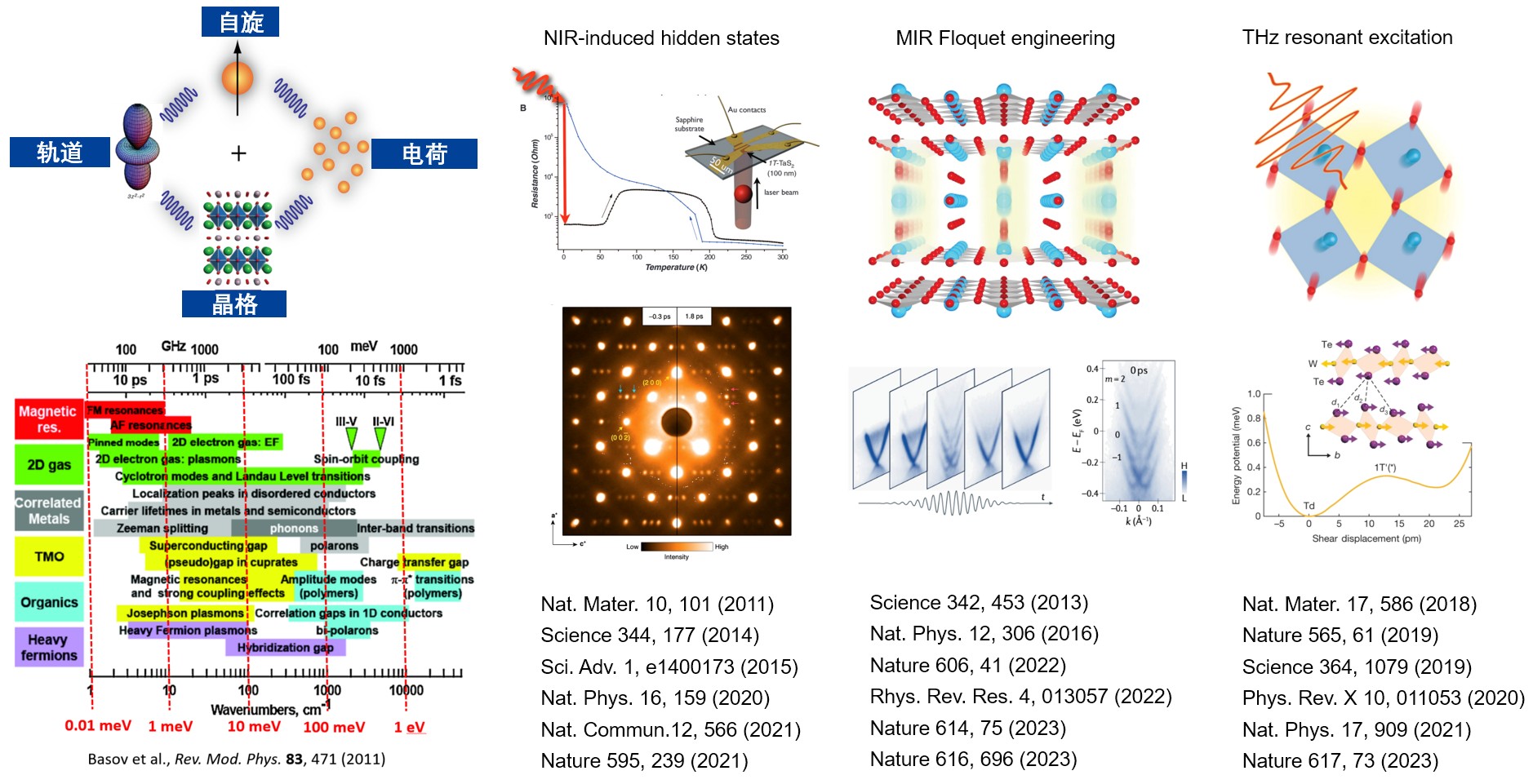
I. Ultrafast Optical Control of Quantum States
Precise control of macroscopic quantum phenomena in quantum materials is a core challenge for practical applications. Ultrafast lasers provide a new nonequilibrium paradigm: femtosecond light fields can manipulate intrinsic orders such as ferromagnetism and charge-density waves, and can even induce exotic phenomena including photoinduced superconductivity, hidden order parameters, and transient topological phases. The difficulty lies in overcoming equilibrium constraints and controlling nonlinear, multi-degree-of-freedom couplings with precision.
Mechanistically, ultrafast lasers control quantum materials mainly through two routes:
1. Instantaneous excitation of coherent phonons and lattice control
Ultrafast pulses can excite coherent phonons—macroscopic periodic atomic displacements of the lattice—and thereby induce new phases by (1) modifying the crystal-field potential experienced by electrons through lattice distortion, and (2) driving electrons toward new minima of the potential-energy landscape, for example through strain-induced band-topology changes.
2. Ultrafast dynamical control of carrier density
Ultrafast lasers can transiently change carrier density. Compared with chemical doping, this offers time-domain control on femtosecond-to-picosecond scales and continuous tuning via pump fluence, while also avoiding intrinsic limitations such as disorder scattering. This makes it a powerful way to explore nonequilibrium evolution across quantum phase diagrams.
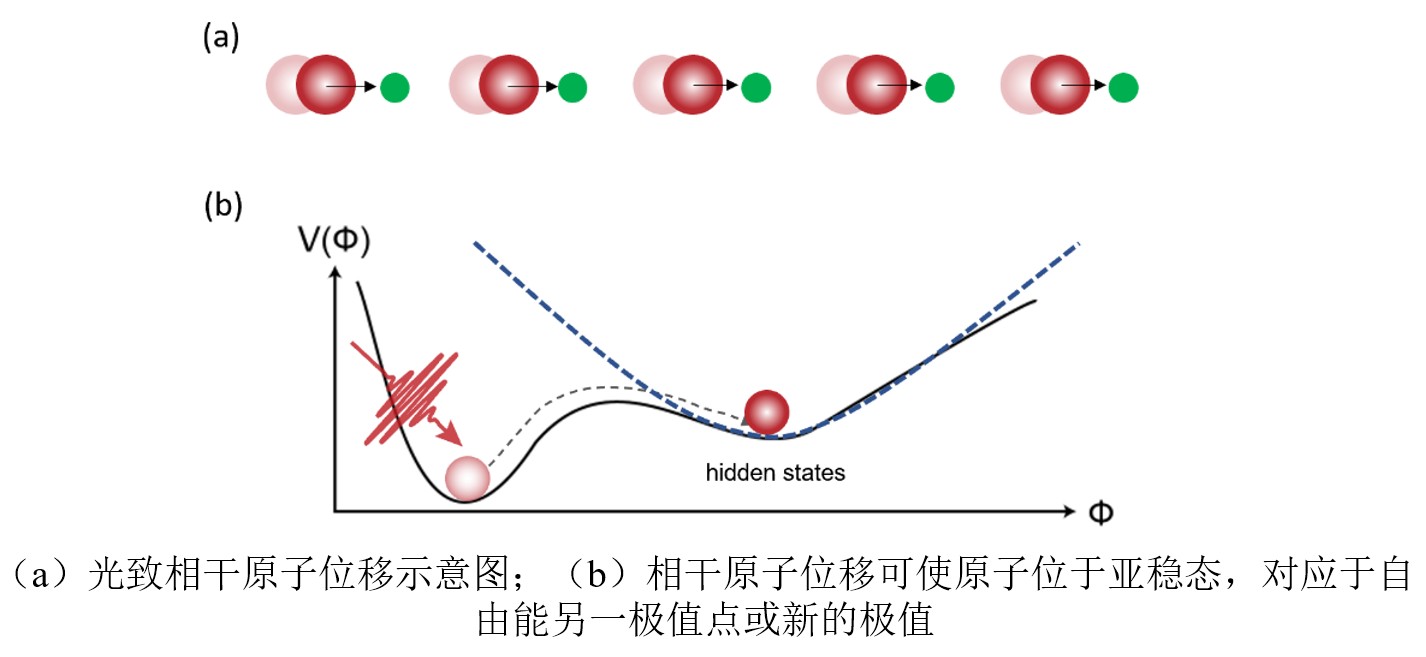
Selected results from our group on laser control of quantum states include:
1. We proposed a physical route to photoinduced two-dimensional electronic states and realized it for the first time in the charge-density-wave material 1T-TiSe2, where signatures suggestive of a superconducting-gap-like electronic state were observed. [Nature 595, 239 (2021)]
2. We realized an unusual photoinduced metastable metallic state in 1T-TiSe2 and found that its lifetime is tunable. [Phys. Rev. Lett. 130, 226501 (2023)]
3. We further verified this photoinduced two-dimensional electronic state in the charge-density-wave material GdTe3. [npj Quantum Materials 10, 16 (2025)]
II. Revealing Phase Mechanisms by Decoupling Many-Body Interactions in Ultrafast Processes
Electronic-structure phase transitions—such as superconductivity and charge-density-wave formation—are central topics in condensed matter physics. In equilibrium temperature-dependent measurements, where Te = Tl (electronic and lattice temperatures), it is difficult to separate lattice and electronic degrees of freedom and therefore hard to determine the individual roles of electrons, phonons, and the lattice. Ultrafast laser pumping provides a new dimension: because light–electron, electron–phonon, and phonon–lattice interactions occur on very different timescales, one can transiently disrupt electronic interactions and trigger an electronic transition while the crystal structure initially remains unchanged. This makes it possible to separate electronic and lattice degrees of freedom on ultrashort timescales (Te ≫ Tl) and to disentangle their contributions. Time-resolved pump–probe photoemission also grants access to unoccupied electronic states that are inaccessible in conventional equilibrium photoemission.
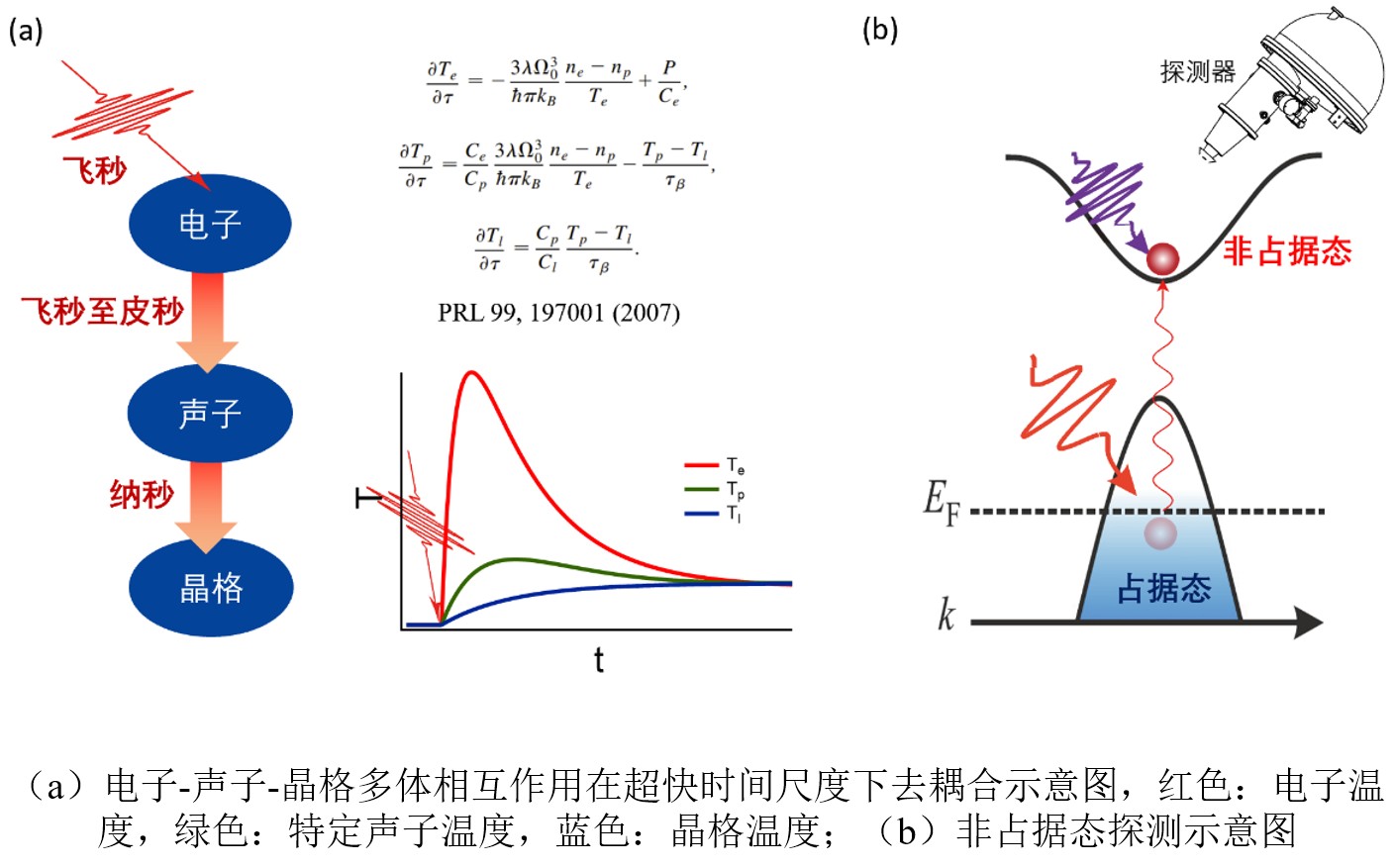
Selected results from our group on laser control of quantum states include:
1. We showed that the nematic transition in iron-based superconductors must include contributions from electron–lattice coupling, clarifying long-standing controversies from equilibrium experiments. [Phys. Rev. Lett. 128, 246401 (2022)]
2. We confirmed a purely electronic structural transition in the excitonic-insulator candidate Ta2NiSe5, showing that many-body interactions beyond bare Coulomb attraction are essential in such electronic phase transitions. [Phys. Rev. B 101, 235148 (2020)]
3. We demonstrated that the three-dimensional charge-density-wave condensation in kagome superconductor KV3Sb5 is driven primarily by electronic correlations; when those correlations are transiently screened, interlayer order is destroyed while in-plane lattice distortion remains. [Science Bulletin, 2025, DOI: 10.1016/j.scib.2025.02.018]
4. Together with collaborators, we verified the coexistence of a topological surface metallic state and ferroelectricity in TaNiTe5. [Phys. Rev. Lett. 128, 106802 (2022)]
5. Together with collaborators, we confirmed topological Dirac electronic states in the intrinsic magnetic topological candidate EuSn2As2. [Phys. Rev. X 9, 041039 (2019)]
III. Material Systems Currently Studied in the Group
1. High-temperature superconductors, including cuprates, nickelates, and iron-based systems: we use time-resolved probes to study many-body interactions, phase-transition mechanisms, and phase diagrams, and to control superconductivity with ultrafast lasers.
2. Mott insulators on triangular and square lattices: we investigate correlated electronic states with time-resolved methods and explore ultrafast-light-induced doping and other routes to exotic phases such as superconductivity.
3. Charge-density-wave materials: we use ultrafast optical control and time-resolved probes to study formation mechanisms and to engineer unusual states through manipulation of charge order.
4. Magnetic materials, including ferro- and antiferromagnets: we explore ultrafast laser control of magnetism.
Time-Resolved Techniques
After ultrafast photoexcitation, pump–probe and other time-resolved methods are required to observe the ensuing dynamics. A wide range of such techniques now exists for studying transient changes in lattice, spin, and electronic degrees of freedom. With continued progress in ultrafast laser science, the toolbox keeps expanding, including time-resolved x-ray diffraction and terahertz spectroscopy, enabling studies from the femtosecond down to the attosecond regime. In our laboratory, TR-ARPES is a key method for probing electronic structures after ultrafast excitation and capturing transient electronic states with high temporal precision.

I. Time- and Angle-Resolved Photoemission Spectroscopy
Angle-resolved photoemission spectroscopy (ARPES) directly measures electronic states in solids, including both energy and momentum, and is therefore one of the most powerful tools for studying microscopic electronic structure in advanced materials such as high-temperature superconductors and topological insulators. It is often called a “microscope” for electronic structure. ARPES works by shining light on a material, ejecting electrons via the photoelectric effect, and measuring their energy, angle, and intensity; with momentum and energy conservation, one reconstructs the spectral function of the solid. Synchrotron radiation, gas-discharge lamps, and lasers can all be used as probes, with energy resolution better than 0.5 meV. Time-resolved ARPES (TRARPES) extends this approach to nonequilibrium physics by using an ultrashort pump pulse to excite the sample and a delayed probe pulse to photoemit electrons. By varying the pump–probe delay, one records the ultrafast evolution of electronic structure. Because pulsed lasers obey a fundamental time–bandwidth limit, energy and time resolution must be optimized according to the needs of each experiment.
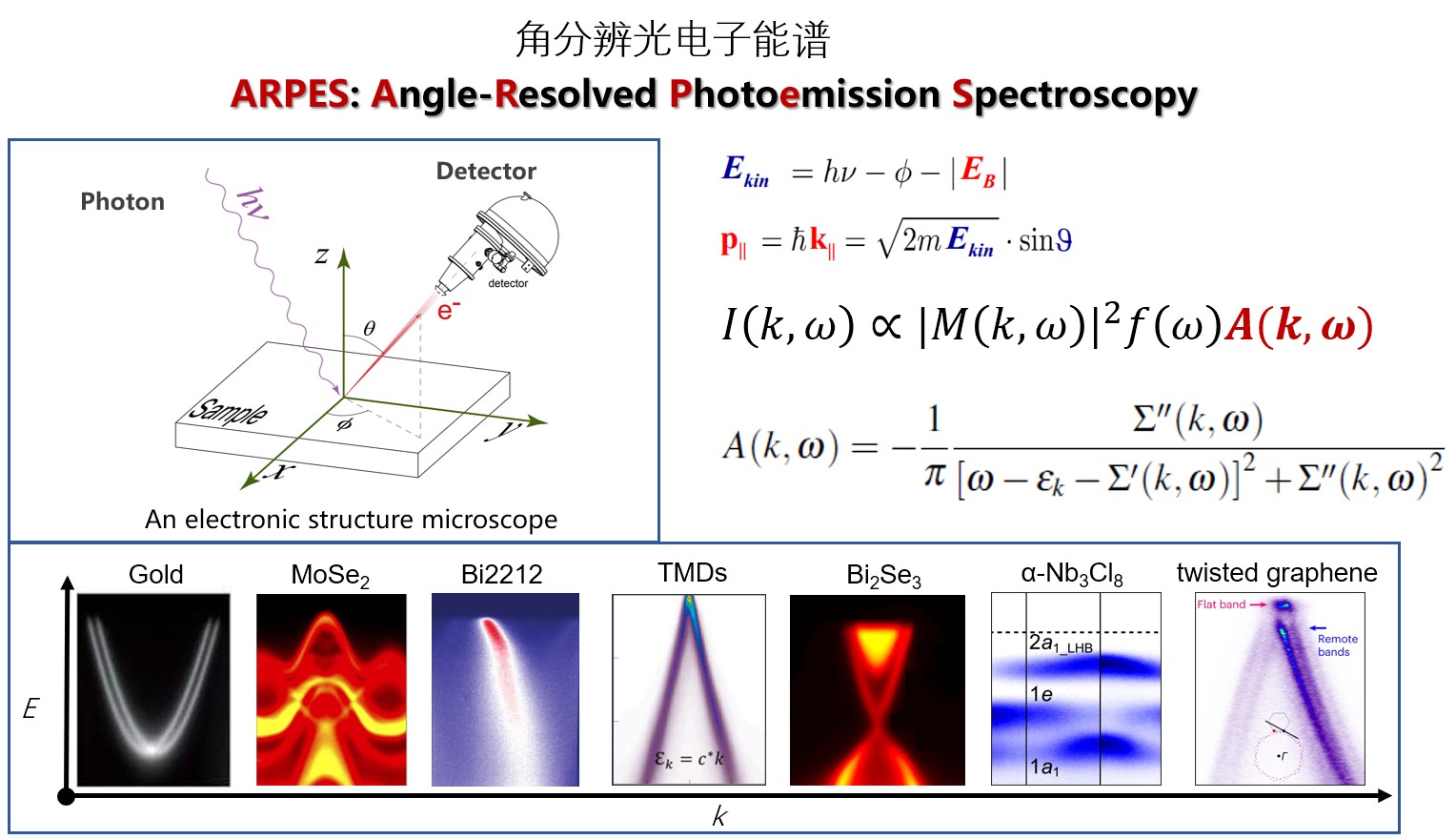
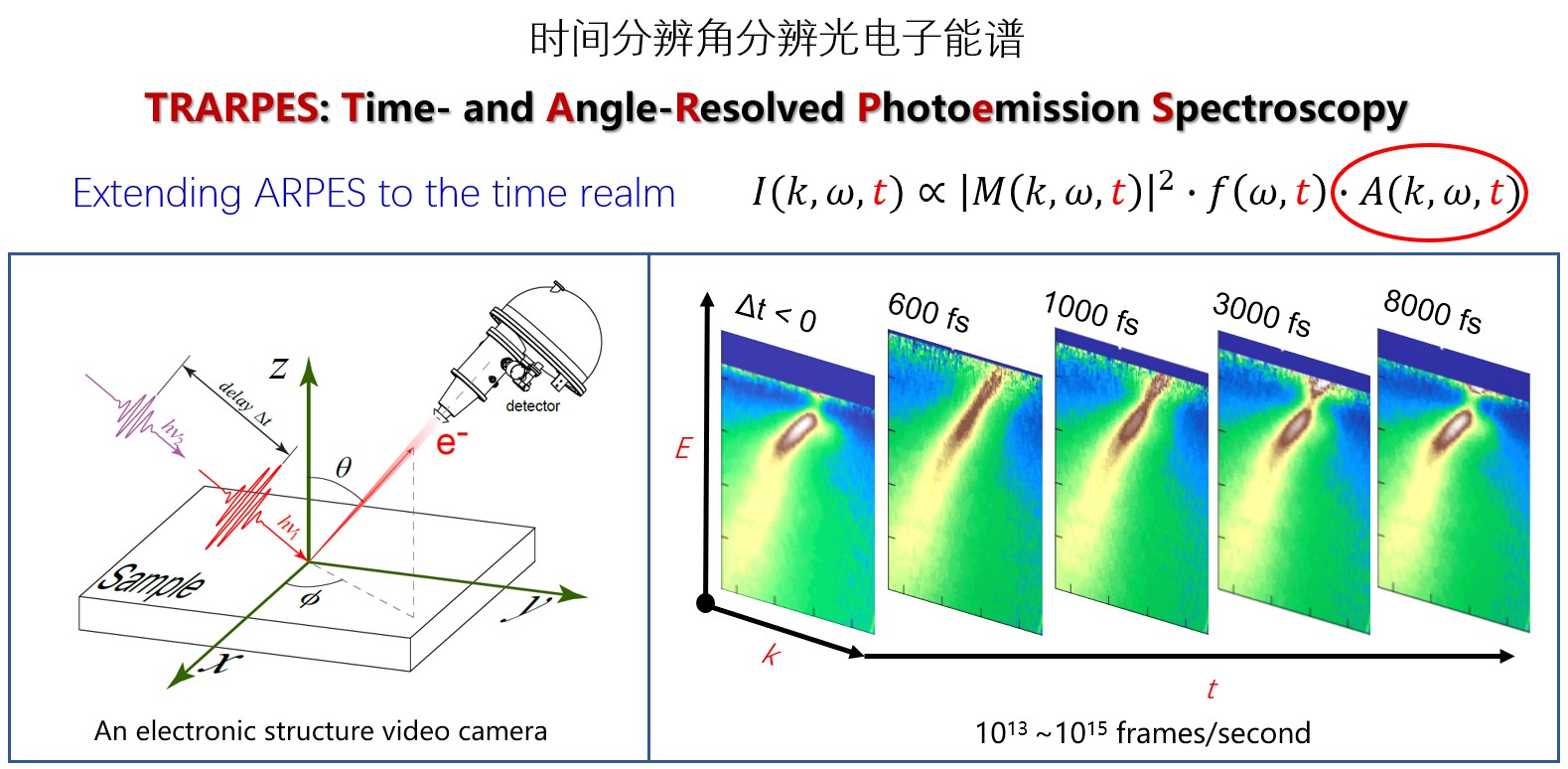
Below are some of our technical developments and representative TRARPES capabilities.
1. Our current laboratory plan includes two TRARPES systems and one time-resolved transport platform. The main laboratory is located in Room B119, Building M, Zhongguancun campus.
| Pump (eV) | Probe (eV) | Repetition Rate (GHz) | Energy Resolution (meV) | Time Resolution (fs) | Spatial Resolution (μm) | Sample Temperature (K) | |
| Time Resolved | 0.1 ~ 4 | 5 ~7 | 0.002/n | > 16 | > 50 | < 2 | 2 ~ 400 |
| High Energy Resolution | 3.5 | 7 | > 2 | < 0.5 | > 15000 | < 5 | 2 ~ 400 |
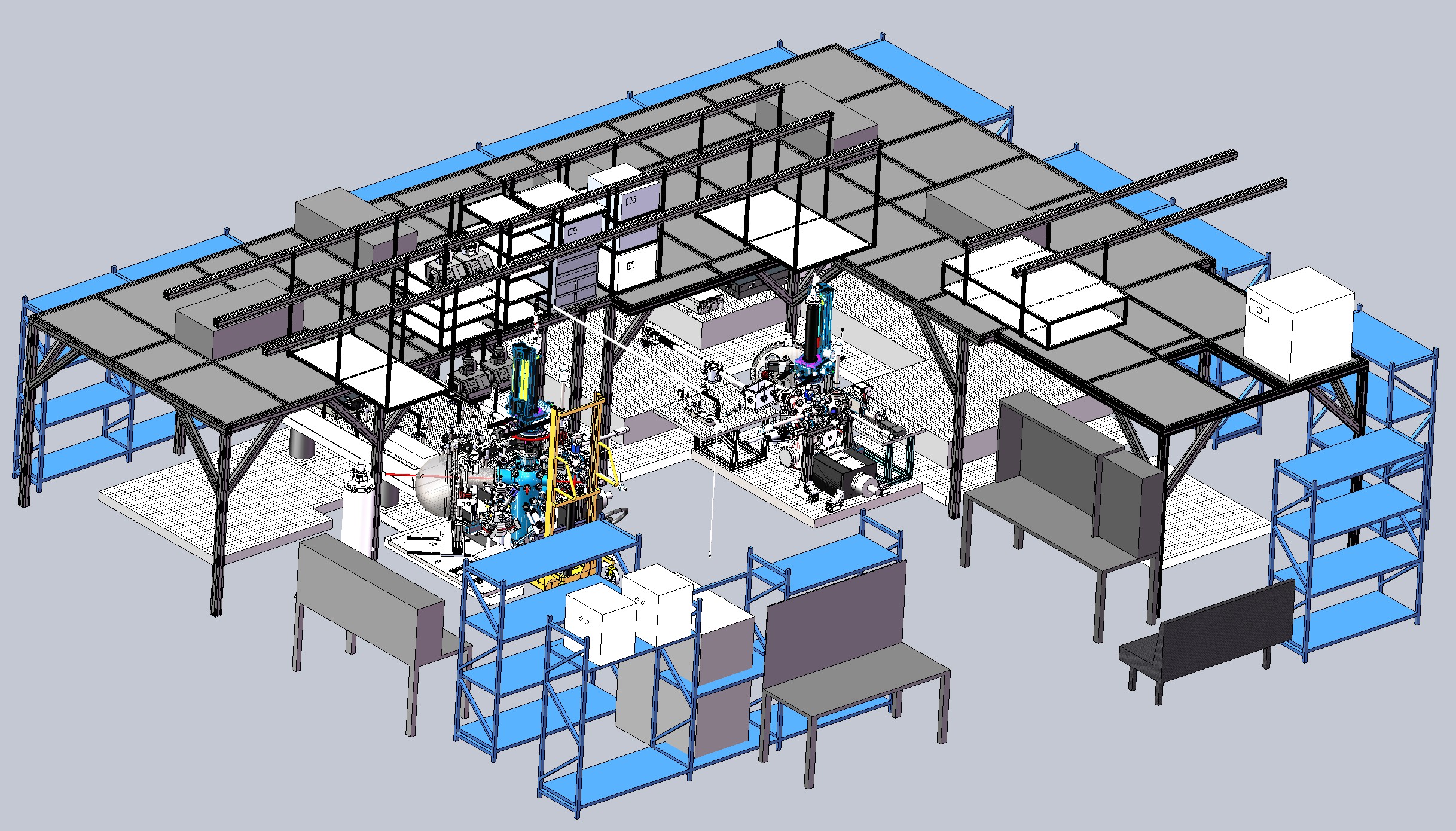
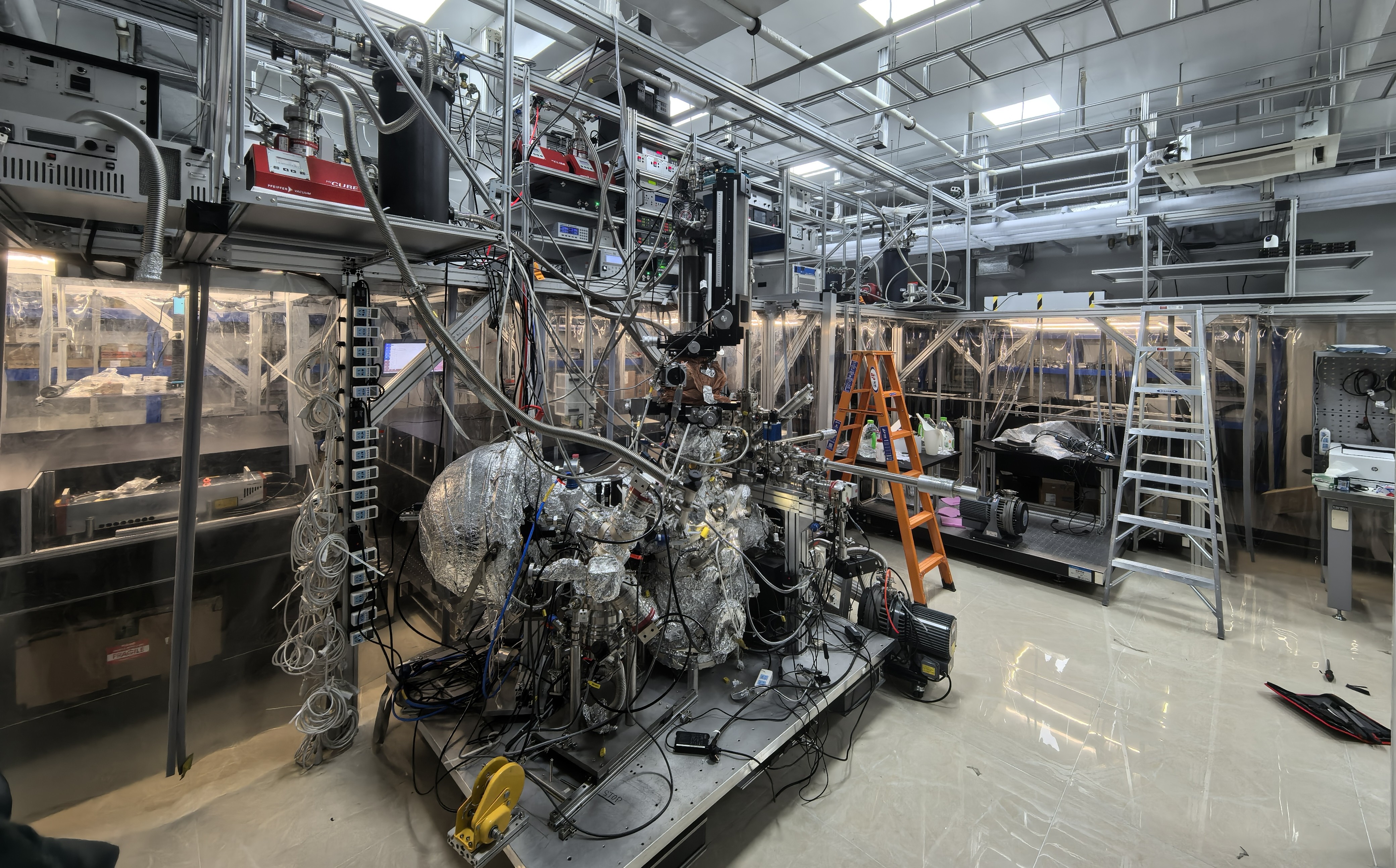
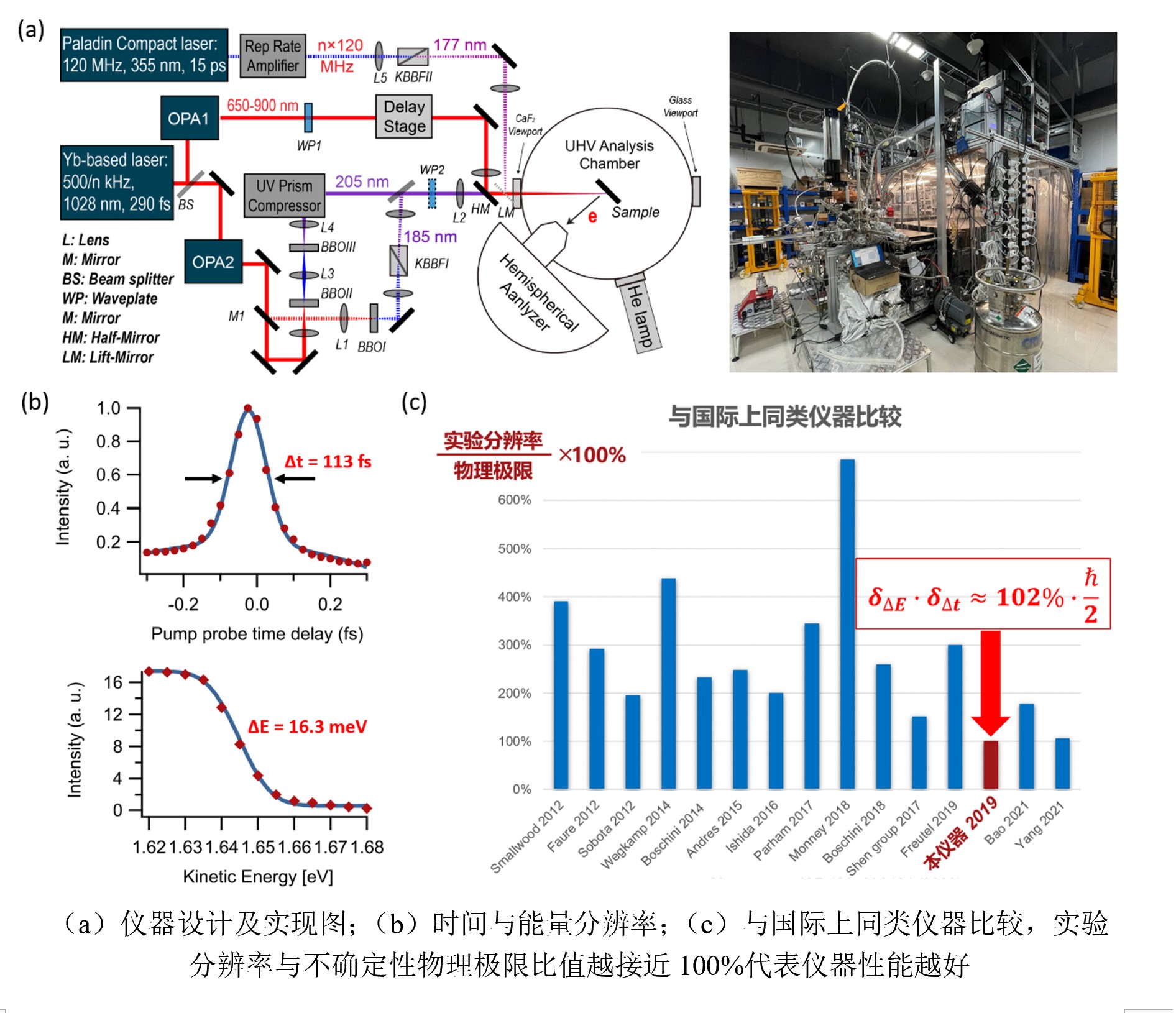
2. We built a high-performance TRARPES instrument whose time–bandwidth product approaches the physical limit. It achieves 16.3 meV energy resolution and 113 fs time resolution (FWHM), with δ∆E∙δ∆t ≈ 102%∙ℏ/2, placing the system at the international forefront. [Rev. Sci. Instrum. 90, 063905 (2019)]
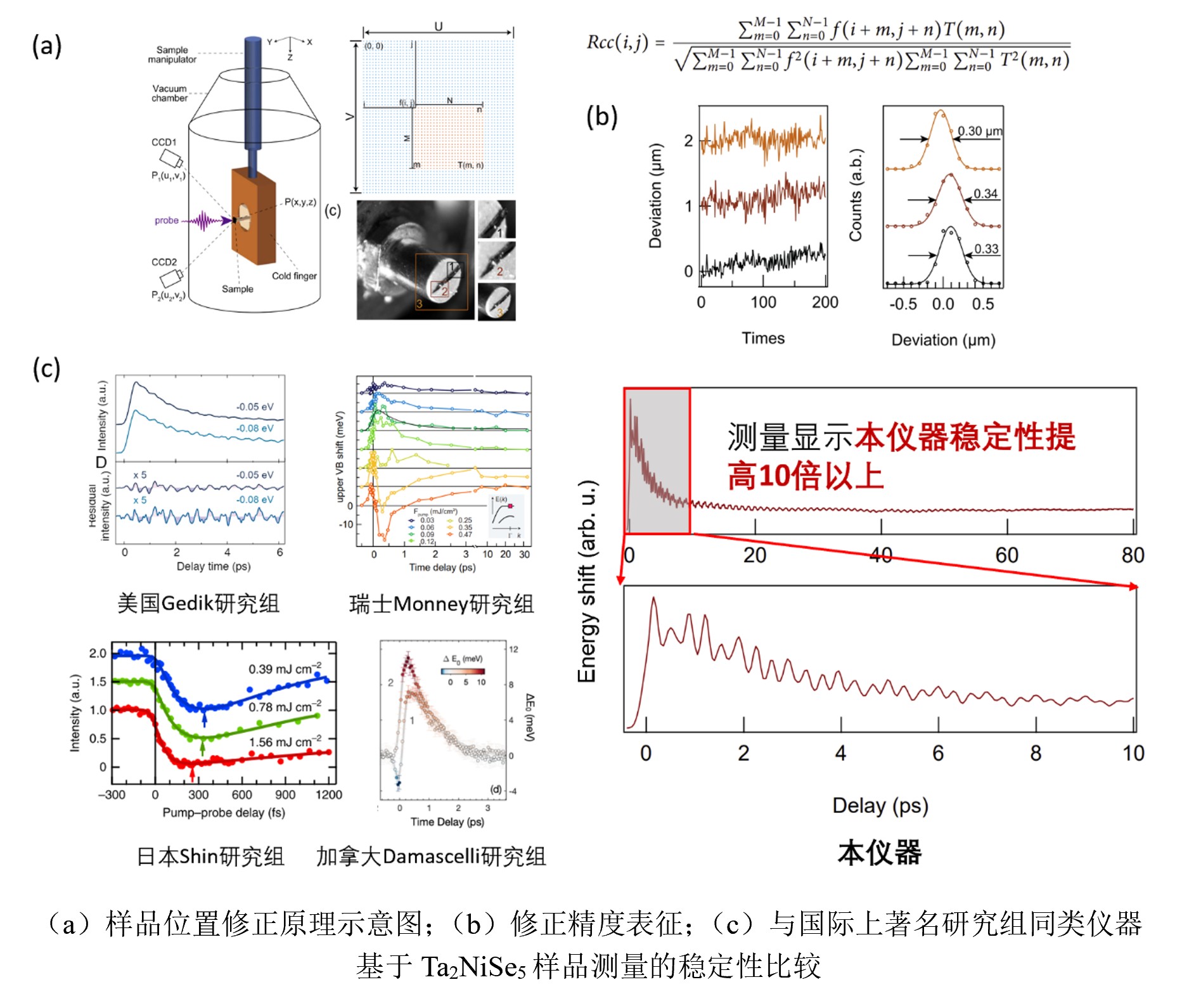
3. We developed a high-precision sample-positioning and auto-correction system for TRARPES in ultrahigh vacuum, improving experimental stability by more than an order of magnitude. The system reaches sub-micrometer accuracy and effectively solves the sample-drift problem. [Rev. Sci. Instrum. 93, 103905 (2022)]
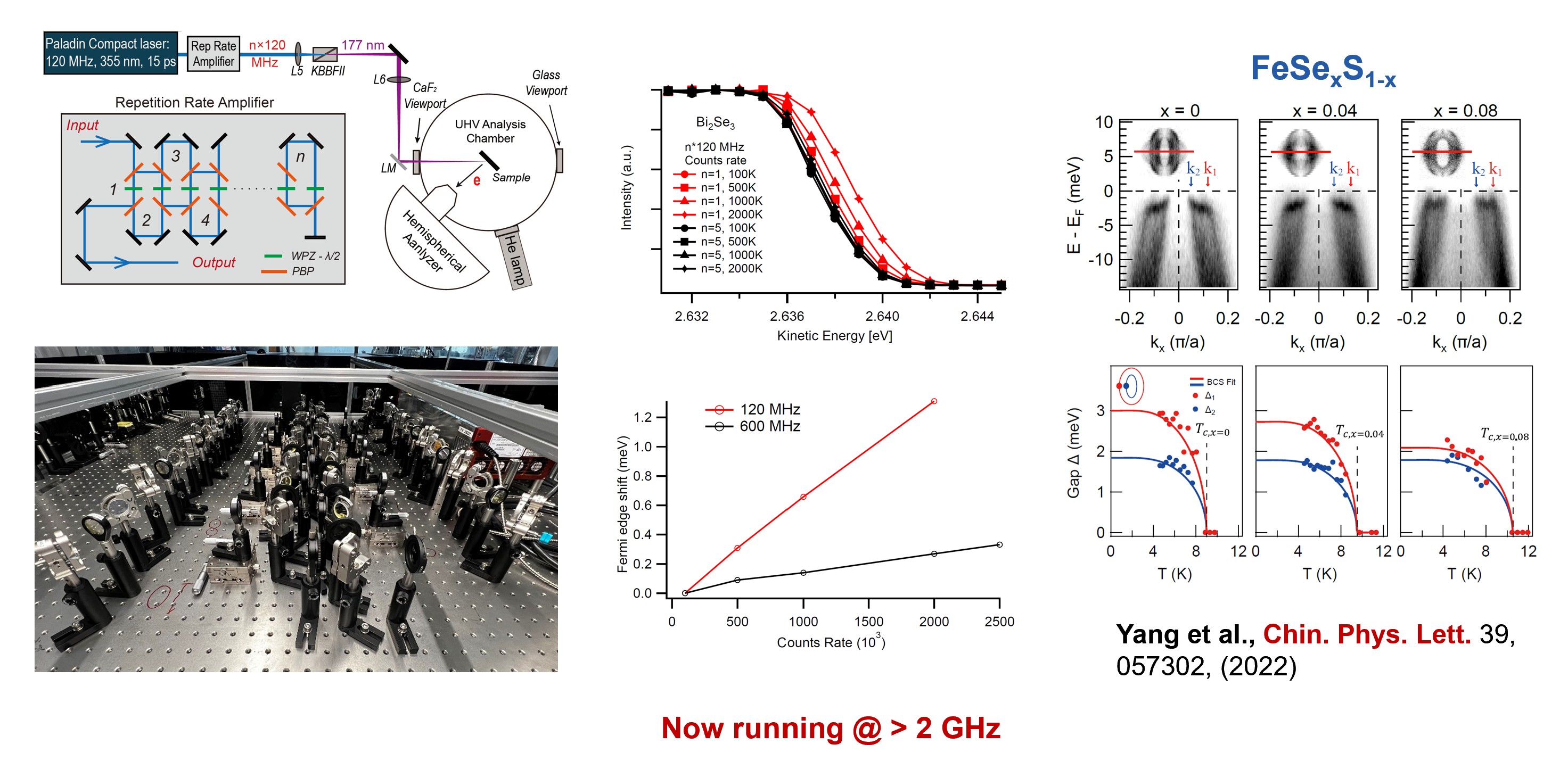
4. Laser repetition-rate multiplication: by splitting and recombining beams while overcoming challenges such as unequal spot size and pulse nonuniformity, we developed a repetition-rate multiplication system that suppresses space-charge broadening in photoemission. It raises a commercial 120 MHz laser to above 1080 MHz, achieves better than 0.3 meV resolution in tests, and improves data quality or efficiency by roughly an order of magnitude. [Quantum Frontiers 1, 15 (2022)]
II. Existing and In-Testing Instruments
1. Infrared-pump TRARPES (Zhongguancun campus).
2. Far-infrared-pump TRARPES (Zhongguancun campus).
3. Time-resolved transport measurement platform (Zhongguancun campus).
4. High-harmonic-probe TRARPES (Huairou campus).
5. TOF-analyzer-based TRARPES (Huairou campus).
III. Research with Existing and Emerging Large-Scale Ultrafast Facilities
1. Collaboration with the MeV ultrafast electron diffraction team at Shanghai Jiao Tong University to measure structural evolution after laser pumping.
2. The Dongguan attosecond light source, enabling time-resolved measurements on attosecond timescales.
3. The Shanghai free-electron laser, enabling ultrafast measurements of lattice evolution after laser pumping.
4. The Shenzhen free-electron laser, providing continuously tunable ultrafast probe light for TRARPES.